



Understanding Smokeless Powder and Muzzleloading
Let’s face it, folks: we don’t understand smokeless powder. We don’t understand what makes a powder smokeless; we don’t understand the threshold for a propellant to become a “non-smokeless powder.” What we have been fed is not competent information with cited, credible sources. In muzzleloading, it has never been about safety, it has all been about sales.
I well understand the motivation for manufacturers to attempt to promote their products. Few of us actually believe every ad-brag that is blown on paper at significant cost hoping that people will buy into it. Getting people to “buy into things” is what glossy paid ads are intended to do, and that literary license is taken to do so is unsurprising. However, when exaggerations descend from bloated claims to unsubstantiated, blatant falsehoods and outright lies—it is time to cut away the nonsense with the only side of the blade that really stings: the truth. The spectacular level of technical incompetence demonstrated by such foolhardy folks as CVA and most recently, Thompson / Center Arms is misconduct of the highest order in my opinion. It is tantamount to complete negligence, and it is easy to show that. So very easy to show, in fact, that I believe I will.
Thompson / Center Arms, in their owners manual that accompanies their brand new 2007 Triumph inline muzzleloader, really steps into it on pages 16-17 of this manual. In a bizarre, rambling, technically incompetent section that proves to be a huge embarrassment to Thompson / Center Arms, they attempt to help the consumer by “Understanding Black Powder or an approved Black Powder Substitute, Such as Pyrodex,” the name of this section. That would be helpful, of course, if Thompson could possibly buy a clue about understanding it themselves. On the basis of this article, they absolutely do not. The opening paragraph reads, “Make no mistake about it, Black Powder or an approved Black Powder Substitute such as Pyrodex are the only propellant safe to use in a muzzleloading firearm. Oh, you will hear, and possibly read, advice to the contrary but don’t follow it for you will never hear such advice from a competent source.” The article goes down hill from there, leaving the poor victim of the new T/C manual with no “understanding.” Quite the contrary, Thompson / Center obfuscates and complicates things while wearing their own tremendous ignorance like a badge of honor.
Apparently, T/C is asserting that Johan Loubser of Western Powder Company and Hartmut Broemel (two of the world’s finest ballisticians) are incompetent. They apparently feel that muzzleloading legend Dr. Gary “Doc” White is incompetent. T/C apparently feels that muzzleloading’s foremost sabot expert, Del Ramsey of MMP, is incompetent. T/C must feel that Alliant Powder Company, Vihtavuori Powder Company, Accurate Arms Powder Company, Barnes Bullet Company, Browning Firearms Company, Savage Firearms Company, multiple patent holder and master riflesmith Henry Ball are all incompetent. They obviously must feel that I’m incompetent as well. It is a shame that I have to tell Thompson / Center Arms, “America’s Master Gunmaker” how muzzleloaders work and how smokeless powder works, but it seems they are in dire need of an education.
Blackpowder, merely called gunpowder for centuries, is fairly easy to describe. It is not a chemical compound, but a mixture of three distinct organic substrates: sulfur, potassium nitrate, and charcoal. There is no precise substitute for it, chemically or performance wise. Its easy ignition and low explosive nature (explosive being defined as the rate of gas expansion) has yet to be equaled or precisely duplicated. Blackpowder is not at all obsolete; in certain military, mining, road department, and other commercial applications it remains a product that has yet to be replaced or improved upon. Goex would not continue to enjoy the level of commercial, industrial, and aggregate industry sales that it enjoys if their blackpowder was obsolete. The properties of blackpowder in muzzleloading firearms are well known and well-documented in readily available extremely competent sources: Lyman’s Black Powder Handbook & Reloading Manual is an established source that is available to all of us with interest.
Words do mean things; at least they darn well should. According to Merriam-Webster, “substitute” means “a person or thing that takes the place or function of another.” There is little confusion that a “substitute teacher” in the classroom is not the same teacher, or the equivalent teacher, or is the identical quality teacher. There is seldom any confusion that while vinyl has been used for decades as a “leather substitute” it in no way could be considered animal skin. Perhaps you remember when Naugahyde was jokingly promoted as the hide of the Naugabeast? Naturally, by now, there are many readily available “Naugahyde substitutes.” Good grief! By now, the circular logic of what an “approved blackpowder substitute” may or may not be is all up to the discretion of the would-be product seller and ad-buyer.
You might be using a “sugar substitute” or a “cream substitute” in your morning’s coffee. The word “substitute” tells us nothing of quantity, granulation, or chemical composition, or behavior. It defines nothing at all; it merely tells us that it is taking the place or function of another. The interested reader is referred to Major General Julian S. Hatcher, USA, Retired in “Hatcher’s Notebook” (Third Edition, 1962) pages 300-360 and pages 519-540 to learn more of the well-researched, well documented characteristics of small arms propellants and primers. If the perpetrators of the Thompson / Center Triumph owners manual had studied this, they might gain a rudimentary understanding of how small arms propellants and firearms actually work.
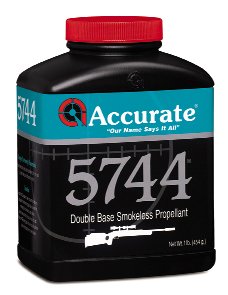
Smokeless powder is defined, designated, and regulated by the United States Department of Transportation and the National Fire Protection Association, as is black powder. Pyrodex, Triple Se7en, American Pioneer Powder, Black Mag 3, Accurate Arms 5744, and Hodgdon-IMR SR4759 are all smokeless powders as mandated by the DOT and the NFPA. As a matter of fact, I recently reviewed Hodgdon’s new “Triple Se7en Magnums” pellets sent direct to my door from Hodgdon Powder Company—quite favorably, I might add. The box is loudly marked “Smokeless Powder For Small Arms.” The FedEx shipping label filled out by Hodgdon direct to me also states “Smokeless Powder For Small Arms.” That is what it is, according to all the reputable, legitimate authorities involved. I have personally tested and used all of these products mentioned quite safely and successfully in muzzleloading firearms.
None of these products are remotely similar in terms of geometry, chemical composition, corrosivity, hygroscopicity, heat of explosion, burn rate, gas generation, or performance.
This is important: NONE of these propellants may be safe in a muzzleloading or other firearm at all.
At the same time, contingent on quantity, bore size, and projectile or projectiles being used, firearms metallurgy and design and other factors: ALL of them MAY be. Industry standards dictate than until something is shown and proven to be safe, it is NOT SAFE. It really is that simple.
Ardesa S. A. is a Spanish black powder firearm manufacturer. Though the name “Ardesa” itself may not mean much to you, it is Ardesa that made the barreled actions for Austin & Halleck, Ardesa that Traditions imports and sells, and Ardesa that makes the imported Genesis for Remington which Traditions actually imports for Remington. Ardesa publishes loading tables for the muzzleloaders.
The Ardesa loads are clear, they are blackpowder loads. The suggested load for their .45 caliber Hawken model is 55 grains of FFFg blackpowder pushing a .440 in. diameter round ball. Now, I would never suggest that you use 100 grains by volume of Blackpowder much less 100 grains of Pyrodex or Triple Se7en in this rifle—that would be reckless, negligent, and a horrific overload based on their presented data. Until a specific load is shown to be safe, it is not safe.
While Black Powder defines a propellant, the term “smokeless powder” defines NOTHING. Saying “smokeless powder” is meaningless. After all, there are over 200 different smokeless powders manufactured today. When the term “smokeless powder” is used, it is no more precise or meaningful than saying “fuel.” I can’t answer what fuel you might or should use; I have no idea if you are fueling a gas grill, a diesel engine, a 4-cycle engine, a 2 cycle chainsaw, or an extremely high compression sports car. The wrong fuel can destroy your equipment, and of course has done so. So can the wrong type of powder, but merely saying powder or smokeless powder tells us nothing of the design parameters of any firearm, nor what have been proven safe as shown by proof-testing. Proof testing is a big deal; there is no substitute for it; please see http://www.chuckhawks.com/big_deal_about_proof.htm for an older article written by a hard-working firearms authority some years back. This author is a credible, competent, respected source that documents his sources and tries his very best to talk and shoot straight. He is also a very good friend of mine.
Quality firearms are designed with industry standards of metallurgy, component thickness, and integrated component capabilities all by design. A design, no matter how good it looks on paper or how well it comports to industry standards is still just a design. To become viable, usable, safe product the design must proven and shown to be as suitable by extensive testing long before offered to the consumer. We do not assume, we show. We do not assert, we demonstrate and prove. We do not guess or speculate, we know. That is what all reputable firearms manufacturers do throughout the world. We need to be able to show that structures can hold what we have designed them to hold whether high-rise apartments, bridges, or roads. We need to be able to show that tires can stay together under the conditions they are used.
If you read “Hodgdon Powder Shotshell Manual” (October, 1996) you’ll learn that when the family of colloid based propellants were introduced in 1880 – 1890 as black powder substitutes it was met with some consumer resistance; folks didn’t want to give up their pretty Damascus barrels in favor of the early modern steels, sometimes called “fluid steel.” By the late 1800’s, it was clear that the better, more efficient, safer propellants were going to be the colloid family and the Winchester .30-30 and .38-40 Krag already had demonstrated and proved they were the better way. So clearly so, that shotgunners soon fell into line. As cited in the Hodgdon manual, the Winchester Model 1893 blackpowder pump became the Model 1897, the Winchester blackpowder lever action was upgraded to the newer, better propellants and was designated as the Model 1901 rolling block. Over a century ago, colloid-based propellants have gotten better as have modern steels and manufacturing techniques. It has all gotten better.
There are differences in propellants, to be sure. As you can read in http://www.chuckhawks.com/difference_black_powders.htm , a missive that has become a standard reference work thoughout the country, there certainly are dramatic differences between propellants. The fundamentals of competent firearms design, standards, and testing have not changed significantly over the last century at all. Smokeless powders are the first and best blackpowder substitutes and that has nothing to do with the method of loading a firearm. The .45-70 Government blackpowder cartridge has long been commercially offered loaded with smokeless powders; the 3 DE (dram equivalent of black powder) designation is still printed on fresh shotshells and shotshell boxes though it is modern, progressive, energetic cellulose propellants that are in daily use throughout the world.
John Moses Browning understood it with the Winchester 1897 he designed, he well understood it with his magnificent Auto-Five, he understood it with the Colt 1911 he designed, and he understood it with arms designed for the United States Government that sustained us through two World Wars. We simply use the ignition source, propellant type and quantity, sabot and projectile that our muzzleloaders are designed to use, and proven competent and safe to use by testing and documentation.
It is no more complex than that, my friends. We are all here to have fun with our friends and family enjoying the outdoors together with recreational shooting sports. There is no need to let the green-eyed marketing hyperbole distort or distract us from what is shown and what is known. Muzzleloading has come a long way; so have propellants, sabots, and projectiles. What adds to our humane, clean harvesting of game and what removes the potential of corrosion, stink, and mess can add immensely to our pleasant hours in the field. It is great to be able to see what you are shooting at; being blinded by your own firearm is the really long way around the skeet field.
Make the choice that suits you; I support your personal choice whatever it might be. But please, do yourself a favor and make an informed decision. At one time, blowing a bunch of smoke is what muzzleloaders did. Now, the only acrid belches of smoke seem to emanate from a couple of once-reputable manufacturers themselves. The truth is a bitter pill for them to swallow.